自己投資の一つとしてチャレンジしている Programming の Java の独習状況を Blog で公開しています。今回はファイルの読み込み方法について紹介します。
——————————————————-
▼1. ファイルを読む方法 (Read) の概要
——————————————————-
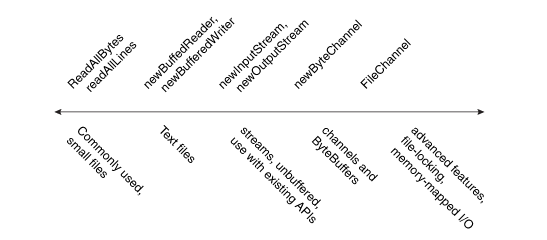
ファイルは byte の連続なので byte をどのように読むかにより使う method が変わります。
—————————–
1-1, サイズの小さいファイルの read: readAllBytes, readAllLines
1-2, buffered input stream を返しStream I/O の利用した read: newBufferedReader
1-3, unbuffered input stream を返しStream I/O の利用した read:newInputStream
1-4, buffered input stream を返し Channel I/O の利用した read:newByteChannel
—————————–
1-1, サイズの小さいファイルを読む場合、readAllBytes や readAllLines の method を使います。
1-2, buffered input stream を返して (メモリを利用しディスクアクセスなしで) Stream I/O を使い byte を 読む場合、newBufferedReader の method を利用します。
1-3, unbuffered input stream を返して (ディスクにアクセスし) Stream I/O を使い byte を読む場合、newInputStream の method を利用します。
1-4, buffered input stream を返して (メモリを利用しディスクアクセスなしで) Channel I/O を使い Buffer を 読む場合、newByteChannel の method を利用します。
——————————————————-
▼2. ファイルを読む (Read) 方法
——————————————————-
2-1, サイズの小さいファイルを読む場合
readAllBytes でテキストを読み、内容を出力する例
import org.slf4j.Logger;
import org.slf4j.LoggerFactory;
import java.io.File;
import java.io.IOException;
import java.nio.file.Files;

public class readfileallbytesv1 {
     private static final Logger log = LoggerFactory.getLogger(readfileallbytesv1.class);
     public static void main(String... args){
         File file = new File("/home/hoge/tempfile.txt");
         String content = "";
        try{
             content = new String(Files.readAllBytes(Paths.get(file.toURI())));
             log.info("{} contains {}",file.getName(),content);
         } catch (IOException e){
             log.error("Error message: ",e);
         }
     }
}
出力結果は以下。This is a temporary file が実際 tempfile.txt に記載されていた内容。
[main] INFO readfileallbytesv1 - tempfile.txt contains --> This is a temporary file.
2-2, newBufferedReader でファイルを開き、BufferedReader でテキストを読むため unbuffered input stream を返して (ディスクにアクセスし) Stream I/O を使い byte を読む例。
import org.slf4j.Logger;
import org.slf4j.LoggerFactory;
import java.io.BufferedReader;
import java.io.File;
import java.nio.charset.StandardCharsets;
import java.nio.file.Files;
import java.nio.file.Path;
import java.nio.file.Paths;

public class newbufferedReaderv1 {
     private static final Logger log = LoggerFactory.getLogger(newbufferedReaderv1.class);
     public static void main(String... args) {
         File file = new File("/home/hoge/tempfile.txt");
         Path sourceFile = Paths.get(file.toURI());
         try (BufferedReader reader = Files.newBufferedReader(sourceFile, StandardCharsets.UTF_8)){
             StringBuilder sb = new StringBuilder();
             String line;
             while ((line = reader.readLine()) != null) {
                 sb.append(line);
             }
             log.info("Read with BufferedReader contains --> {}", sb.toString());
         } catch (Exception e) {
             log.info("Something went wrong! ", e);
         }
     }
}
出力結果は以下。This is a temporary file が実際 tempfile.txt に記載されていた内容。
[main] INFO newbufferedReaderv1 - Read with BufferedReader contains --> This is a temporary file.
2-3, newInputStream でファイルを開き、BufferedReader で byte を読むため、unbuffered input stream を返して (ディスクにアクセスし) Stream I/O を使い byte を読む例。出力の過程で InputStream のインスタンスを BufferedReader のインスタンスでまとめる(ラップする)必要があり、Stream は複数の thread から同時にアクセスできる。
import org.slf4j.Logger;
import org.slf4j.LoggerFactory;
import java.io.BufferedReader;
import java.io.File;
import java.io.Reader;
import java.io.InputStream;
import java.io.InputStreamReader;
import java.nio.charset.StandardCharsets;
import java.nio.file.Files;
import java.nio.file.Path;
import java.nio.file.Paths;

public class newinputstreamcode {
     private static final Logger log = LoggerFactory.getLogger(newinputstreamcode.class);
     public static void main(String... args) {
         File file = new File("/home/hoge/tempfile.txt");
         Path sourceFile = Paths.get(file.toURI());
         try (InputStream in = Files.newInputStream(sourceFile)){
             InputStreamReader ins = new InputStreamReader(in,StandardCharsets.UTF_8);
             BufferedReader reader = new BufferedReader (ins);
             StringBuilder sb = new StringBuilder();
             String line;
             while ((line=reader.readLine()) != null) {
                 sb.append(line);
             }
             log.info("Read with BufferedReader contains --> {}", sb.toString());
         } catch (Exception e) {
             log.info("Something went wrong! ", e);
         }
     }
}
出力結果は以下。This is a temporary file が実際 tempfile.txt に記載されていた内容。
[main] INFO newinputstreamcode - Read with BufferedReader contains --> This is a temporary file.
2-4, newByteChannel でファイルを開き、buffered input stream を返して (メモリを利用しディスクアクセスなしで) Channel I/O を使って Buffer を 読む例。
import java.io.*;
import org.slf4j.Logger;
import org.slf4j.LoggerFactory;
import java.nio.ByteBuffer;
import java.nio.channels.SeekableByteChannel;
import java.nio.file.Files;
import java.nio.file.Path;
import java.nio.file.Paths;
import java.nio.charset.Charset;

public class newByteChannelcode {
     private static final Logger log = LoggerFactory.getLogger(newByteChannelcode.class);
     public static void main(String... args) throws IOException {
         File file = new File("/home/hoge/tempfile.txt");
         Path sourceFile = Paths.get(file.toURI());
         try (SeekableByteChannel sbc = Files.newByteChannel(sourceFile)){
             ByteBuffer buf = ByteBuffer.allocate(100);
             String encoding = System.getProperty("file.encoding");
             while (sbc.read(buf)>0){
                 buf.rewind();
                 log.info("Read with ByteChannel contains --> {}", Charset.forName(encoding).decode(buf));
                 buf.flip();
             }
         } catch (IOException e) {
             log.info("Something went wrong! ", e);
         }
     }
}
出力結果は以下。This is a temporary file が実際 tempfile.txt に記載されていた内容。
[main] INFO newByteChannelcode - Read with ByteChannel contains --> This is a temporary file.
————————————-
▼3. 参考情報
————————————-
(1) Reading, Writing, and Creating Files https://docs.oracle.com/javase/tutorial/essential/io/file.html
(2) Buffered Streams https://docs.oracle.com/javase/tutorial/essential/io/buffers.html
(3) Module java.base, Package java.nio.file (nio は non-blocking input output の略) https://docs.oracle.com/javase/10/docs/api/java/nio/file/Files.html
以上です。参考になりましたら幸いです。